


What licensing is
Licensing means renting the right to use someone else’s protected intellectual property (IP), such as a character, name, logo, artwork or likeness, on a product, service or promotion. The owner keeps the IP; you pay to use it within agreed limits.
Toys and games are the most visible part of licensing, but the same model runs across almost every consumer category:
- Apparel, footwear and fashion accessories
- Plush, toys, collectibles and blind boxes
- Stationery, cards, posters and publishing
- Gifts, homeware and lifestyle products
- Food, drink, health and beauty
- Electronics and accessories
- Promotions, gift-with-purchase and events
Licensed products are no longer only for children: retailers increasingly use licenses to reach adults, from retro and nostalgic properties to collectors and fans buying for themselves.
The market and the main types of license
Industry surveys put character and entertainment at the top of the licensing market: about US$122 billion of licensed retail sales in 2017, roughly 45% of the global total (LIMA survey, as reported in the BLE 2019 handbook). It helps to think of licensable IP in three groups:
| Group | Typical properties |
|---|---|
| Character & entertainment | Animated series, films, games and apps, books, music, social-media characters |
| Brands & lifestyle | Corporate brands, fashion labels, museums and collections, sports clubs and events, food and drink, automotive, celebrities |
| Art, design & image | Designers, illustrators, image libraries and art collections |
Brand owners license because it earns revenue, extends the brand into categories they could not make themselves, borrows the skills of specialist licensees, reaches new customers and helps protect the trademark across product classes.
Is a license right for your business?
Licensing is open to smaller companies too: you do not need to be a giant to approach a rights owner. Before you do, answer these questions honestly:
- Which properties already sell well in your category, and why? Would the same logic work for the one you want?
- Is there room on the shelf for another property, and how would yours stand out?
- What will be popular 12–18 months from now, when your product actually launches?
- Which retail channels suit the product, and who is the core shopper there?
- Do the property’s values fit your own brand and customers?
- Can you afford the royalty, the minimum guarantee and any marketing commitment?
- Does the licensor’s approval process leave enough time for product development?
Key licensing terms, in plain words
- Property / IP
- The character, brand, artwork or name being licensed.
- Licensor
- The owner of the IP.
- Licensing agent
- A company appointed by the licensor to manage its licensing program in a market.
- Master licensee
- A company holding broad rights for a territory, which may sub-license or appoint manufacturers.
- Licensee
- The manufacturer, retailer, service provider or agency granted the right to use the IP.
- License agreement
- The contract setting out what may be made, where, for how long and on what terms (the commercial terms are often called the schedule).
- Articles
- The exact products the license covers.
- Term & territory
- How long the license runs, and the countries or channels where the products may be sold.
- Royalty
- The percentage (or fixed amount) paid to the licensor on each sale, usually on net sales.
- Advance
- Royalties paid ahead of sales, typically on signing, then credited against royalties earned.
- Minimum guarantee (MG)
- The least royalty the licensee owes over the term, whether or not sales reach it.
- Royalty statement
- The report of what was sold and at what price, usually filed every quarter.
- Common marketing fund (CMF)
- An extra contribution, often around 2% of sales, pooled by the licensor for retail and marketing support.
- Sell-off period
- Time after the term ends to sell remaining stock, commonly 90 days, without manufacturing more.
- Style guide
- The licensor’s rulebook: approved art, colors, fonts, proportions, packaging rules and legal lines.
The first conversation with a licensor
A licensing meeting is a two-way assessment. Come prepared with numbers and examples, and ask as much as you answer.
What the licensor will ask you
- Who are your customers and which channels do you sell through?
- Which other properties do you license, and what worked?
- Which retailers or distributors already buy from you?
- What volumes do you forecast, and at what price points?
- What marketing support can you give the property?
What you should ask the licensor
- What is the audience reach: viewers, readers, players, followers?
- What content is coming next: film, series, games, events?
- Which products sell best today, and why?
- Who else holds a license, in which categories and territories?
- What is unique about the property, and who competes for the same shelf?
- What marketing support comes with the license?
From handshake to contract
- 1Align on the plan
Product vision, channels and a sales forecast, discussed as early as possible.
- 2Deal memo
A short heads-of-terms document with the main commercial points, approved internally on both sides.
- 3Long-form agreement
Legal terms plus your deal’s schedule. It can take weeks; avoid big spending until the deal is approved in writing.
There are three common structures:
| Structure | How it works | Good for |
|---|---|---|
| Standard license | The licensee makes the products and sells them to any customer allowed by the deal. | Manufacturers with a broad customer base |
| Direct-to-retail (DTR) | The retailer signs with the licensor, sources through its own supply chain and pays the royalty. | Large retailers with their own sourcing |
| Sourcing partnership | A retailer and a supplier agree to work together; the supplier holds the license and the retailer commits to buy. | Sharing risk between retailer and maker |
Most licenses are non-exclusive: the licensor could grant similar rights to others. Exclusive deals are rare and expensive; a sole license (only you and the licensor) is a common middle ground. Define the articles precisely: "clothing" is too broad, while "100% cotton short-sleeve adult T-shirts, sizes S–L" is clear. The broader the scope, the more you usually pay.
What a license costs: royalty, advance and minimum guarantee
The royalty is normally a percentage of net sales: your invoice price minus a short list of agreed deductions, such as returns and trade discounts. It can also be set on retail price, on the FOB price or as a fixed amount per unit. Because the FOB price is lower, an FOB royalty rate is typically 2–4 points higher.
| Category | Typical royalty rate |
|---|---|
| Character & entertainment (toys, games, apparel) | 10–12% |
| Design, brands and fashion | 4–12% |
| Food and grocery | 3–6% |
| Full range across licensing | 2–18% |
Rules of thumb from the BLE 2019 handbook. Hot properties and strong licensors can ask more.
Licensors usually ask for an advance and a minimum guarantee (MG). Build them from a realistic forecast: units per year × price × royalty rate = projected royalties for the licensor.
- Forecast net sales over 2 years: US$1,000,000
- Royalty 10% → projected royalties: US$100,000
- Licensor asks to guarantee 50% → MG of US$50,000
- Paid upfront, or split: US$25,000 on signing + US$25,000 at launch
If sales disappoint, you still owe the MG, so forecast honestly. A new or less proven property may come with a low or no advance; a hot property with many bidders costs more.
Royalties are reported and paid every quarter, usually within about 30 days of quarter end, often through the licensor’s royalty system. Some licensors also charge a common marketing fund of around 2% of sales. A few deals use a one-off flat fee instead, typically for promotions or campaigns where a per-unit royalty is impractical.
Term, territory and the clauses to read twice
Term: entertainment licenses typically run 2–3 years because a property’s peak can be short; corporate, lifestyle and art brands often run 3–5 years or longer. The clock starts at signing, and product development can take months, so make sure you keep enough time to actually sell.
Territory and channels: where you may sell, and sometimes which retailer types or named retailers are allowed or excluded.
- Launch dates: a set marketing date, and sometimes penalties for launching late.
- Sell-off: commonly 90 days to sell remaining stock after the term, with no new production and no dumping.
- Minimum orders or production quantities.
- Audit rights: licensors may audit sales; most findings come from net-sales calculation errors.
- Trademarks: which registered marks you may use and how.
- Reporting: royalty statements, plus forecasts and re-forecasts during the year.
- Insurance and product liability naming the licensor, and compliance with the destination market’s safety rules.
Designing and approving the product
This is where licensed programs succeed or fail. The licensor knows the property best; you know your customers and your product. Plan the launch date backwards and build approval time into the critical path: each review can take anywhere from same-day to about three weeks, depending on the contract and on time zones if an agent has to refer to an overseas licensor.
- 1Concept
Sketches or mock-ups of the whole range, so the licensor can judge it as a set.
- 2Artwork
Detailed designs with Pantone references, materials, decoration and any mechanics.
- 3Strike-off
The first physical test of colors, embroidery, print and finishing against the artwork.
- 4Pre-production sample
The finished product before bulk. At Takara, the signed Golden Sample becomes the reference every bulk unit is inspected against.
The style guide is the working spec: character art and proportions, color references, fonts, patterns, packaging rules and the legal copyright line. Modern style guides also carry product ideas and trend packs. Read more in our licensing style guide article.
Making licensed products in Vietnam
Once the license is signed, the hard part is making product that is on-model, compliant and on time. Takara works with a vetted network of partner factories in Vietnam and China, each audited on quality, environmental practice, labor standards and production integrity before an order is placed. How Takara vets partner factories.
- Your style guide becomes the factory brief; color is held to your Pantone references.
- Physical samples for each approval stage, then a signed Golden Sample before bulk.
- 3-stage QC: raw material, in-line (DUPRO) and final AQL 2.5 inspection, documented for every shipment.
- Testing to the destination market, such as EN71 for Europe or ASTM F963 for the US, through partner factories and accredited labs. Declare every market at inquiry.
- Orders, samples, documents and shipments followed in Takara Portal.
See how a licensed program runs end to end on our Licensed Merchandise page, or the full production process.
Licensing in practice: Takara case studies
Takara has worked on every side of a licensing deal: as a licensee, as an OEM manufacturer for a master licensee and as a sourcing partner for US retail.
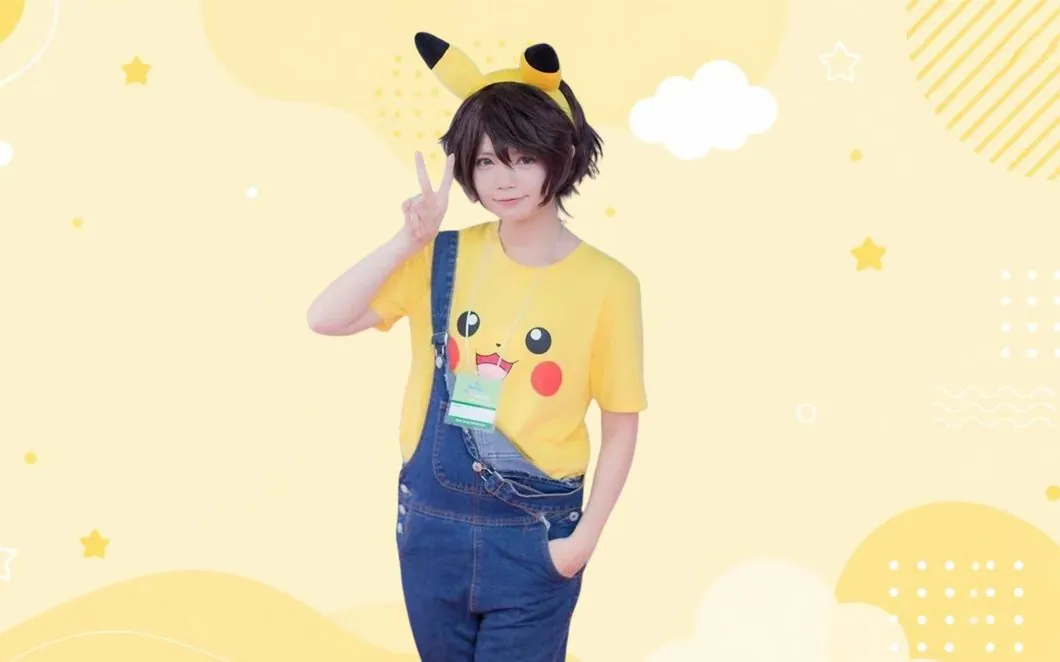 LicenseePokémon in VietnamLicensed apparel and plush under Takara’s Mirako brand from 2016, official licensee from 2018: 8 SKUs in 230+ retail doors.
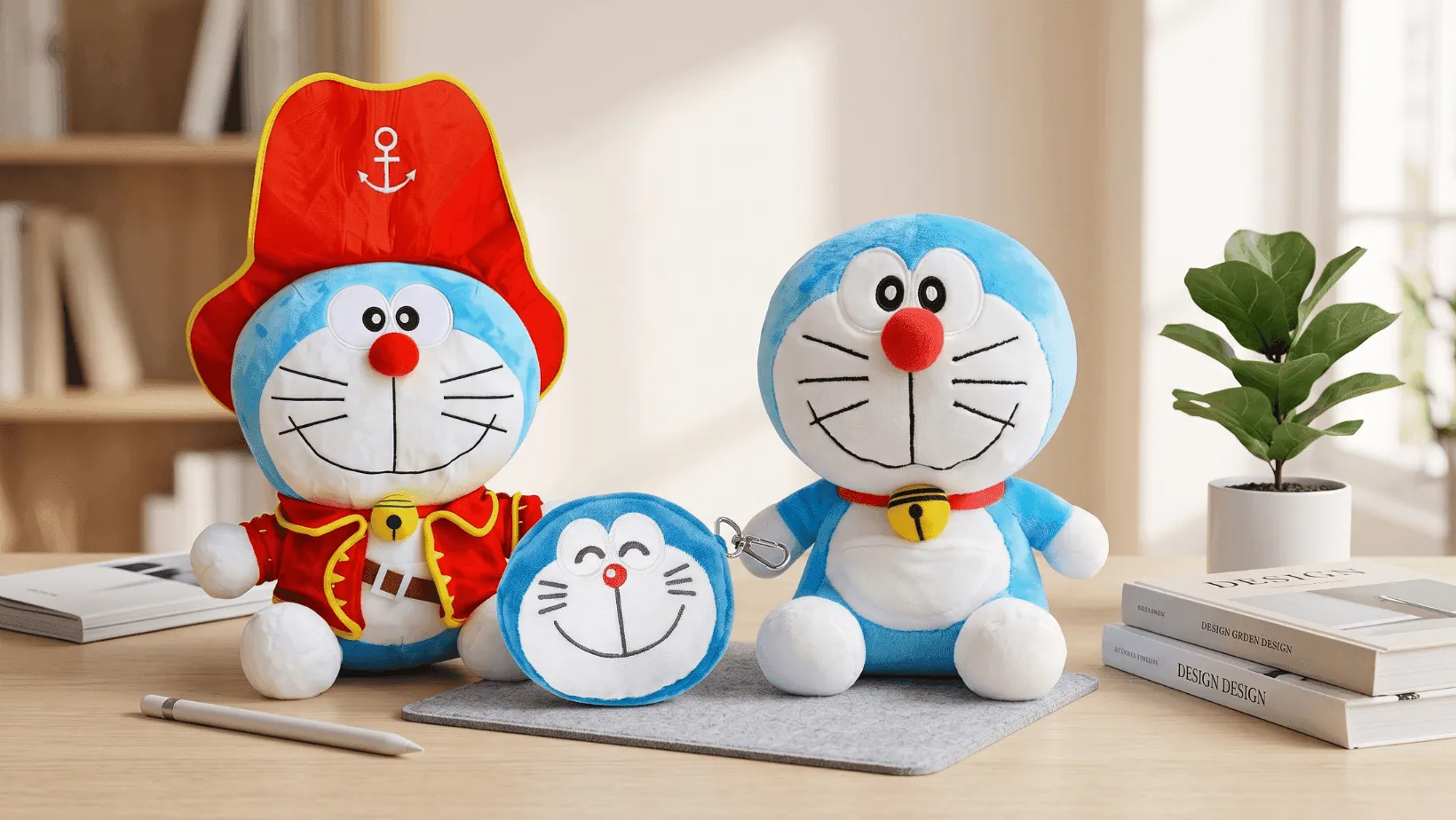 OEM for a master licenseeDoraemon, Shin-chan & One PieceManufacturing for Tagger, the master licensee in Vietnam, since 2018: 26 SKUs built to Japanese licensing QC.
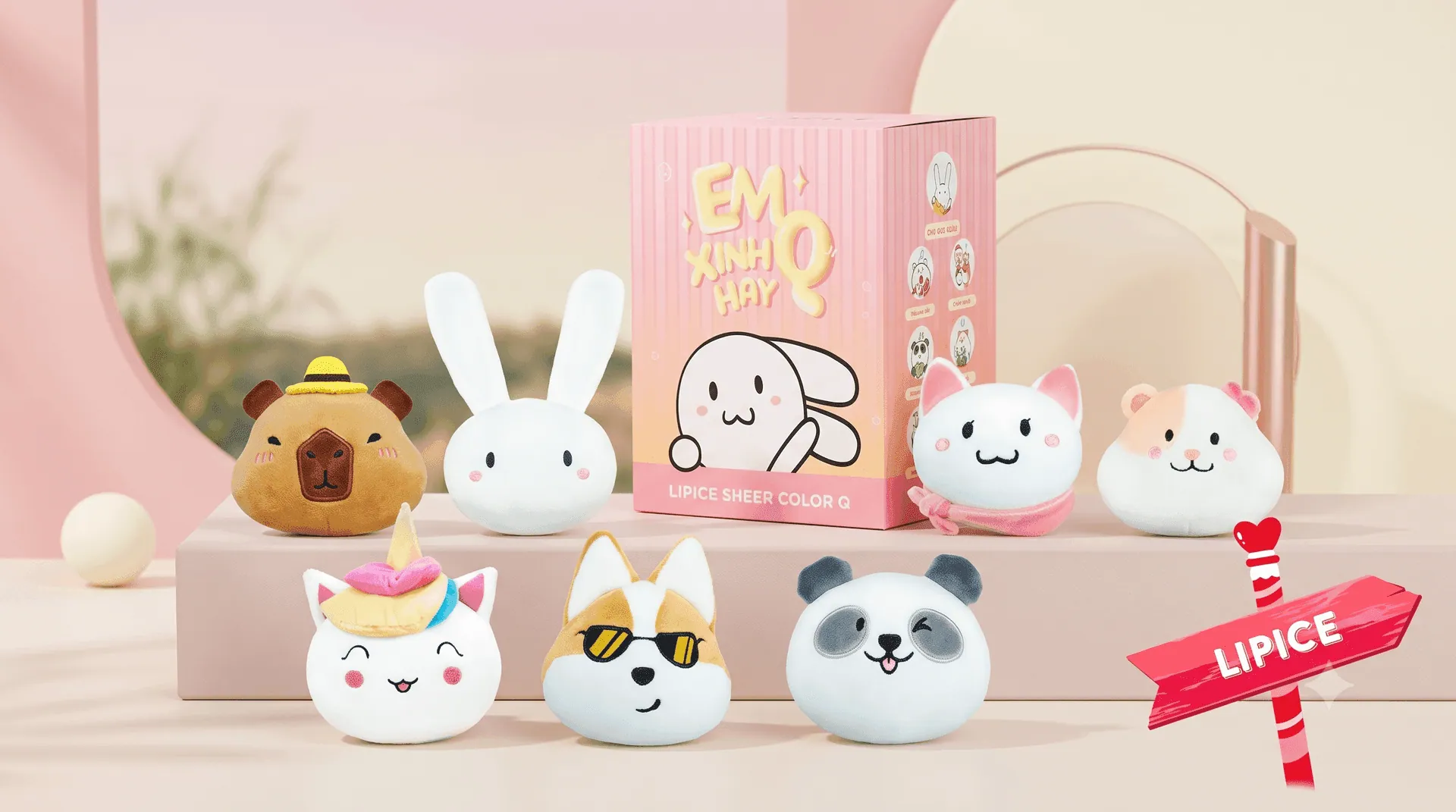 Brand campaignRohto blind box7 designs, R1 samples for the first 3 in 7 days, 23,400 plush delivered 25 days ahead of contract.
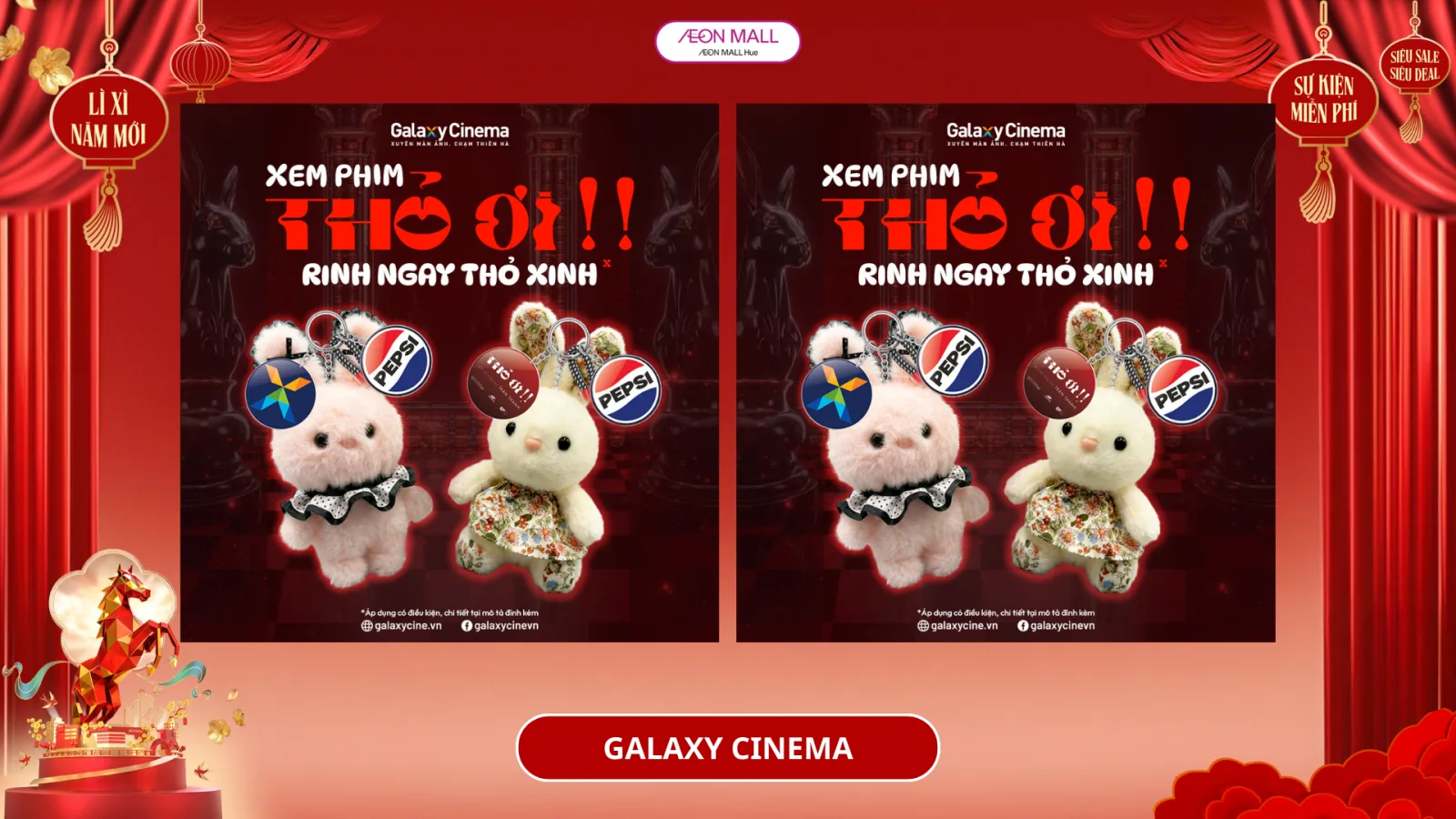 Film merchandiseGalaxy Cinema “Thỏ Ơi”5 SKUs and 3,500 units in 21 days, timed to the film’s release under strict character-design compliance.
Where to meet licensors in Asia
Trade shows are the fastest way to see what is available and book meetings. Plan ahead: big rights owners fill their calendars early, meetings are often 30 minutes, and walking the whole floor surfaces properties you had not considered.
- Vietnam Licensing Expo & VCIPC, organised with VCIPLA, the Vietnam Cultural and Intellectual Property Licensing Alliance, of which Takara is a founding member.
- Hong Kong (HKTDC): the Asian Licensing Conference and licensing shows in Hong Kong, a long-standing gateway between Asian IP and global buyers.
- Brand Licensing Europe (London) and Licensing Expo (Las Vegas) for global properties.
Licensing FAQ
What is brand or character licensing?
Renting the right to use a protected character, brand or artwork on your products, for an agreed term, territory and set of products, in exchange for royalties.
How much does it cost to license a character?
Usually a royalty of about 10–12% of net sales for character merchandise (2–18% across all licensing), plus a minimum guarantee and an advance or upfront payment. In Vietnam the MG is commonly paid 100% upfront. Use the license cost calculator to estimate your own deal.
What is the difference between an advance and a minimum guarantee?
The advance is money paid ahead of sales, usually on signing, credited against royalties. The minimum guarantee is the total royalty you must pay over the term even if sales fall short; it can equal the advance or require further payments.
How long does a license last?
Typically 2–3 years for entertainment properties and 3–5 years or longer for corporate, lifestyle and art brands, often with a sell-off period of about 90 days at the end.
Can a small company get a license?
Yes. Licensors look for partners who know their category and customers, can show a realistic plan and can make on-brand product. Smaller or newer properties can be easier to start with.
Does Takara sell licenses?
No. Licensors or their agents grant licenses. Takara manufactures licensed products to the approved style guide for licensors, licensees and brands, and can advise on planning and approvals.
Sources
Industry practice in this handbook is summarised in Takara’s own words from:
- Brand Licensing Europe & License Global, The Brand Licensing Handbook (2019)
- Licensing International (formerly LIMA), Global Licensing Survey
- Flowhaven, “Minimum Guarantee, Explained”
- Gerard Fox Law, “Merchandise Licensing Agreement: Royalties”
Vietnam payment practice and MG levels reflect Takara’s market experience. This handbook is general guidance, not legal advice: exact terms come from each licensor and your own counsel.