26 SKUs, One Exact Shade of Blue: Manufacturing Doraemon to a Licensor's Standard
Key takeaways
- In 2018, Takara became OEM manufacturer for Tagger, the master licensee of Doraemon, Shin-chan, and One Piece in Vietnam: 26 SKUs across apparel and merchandise, plus e-commerce fulfillment.
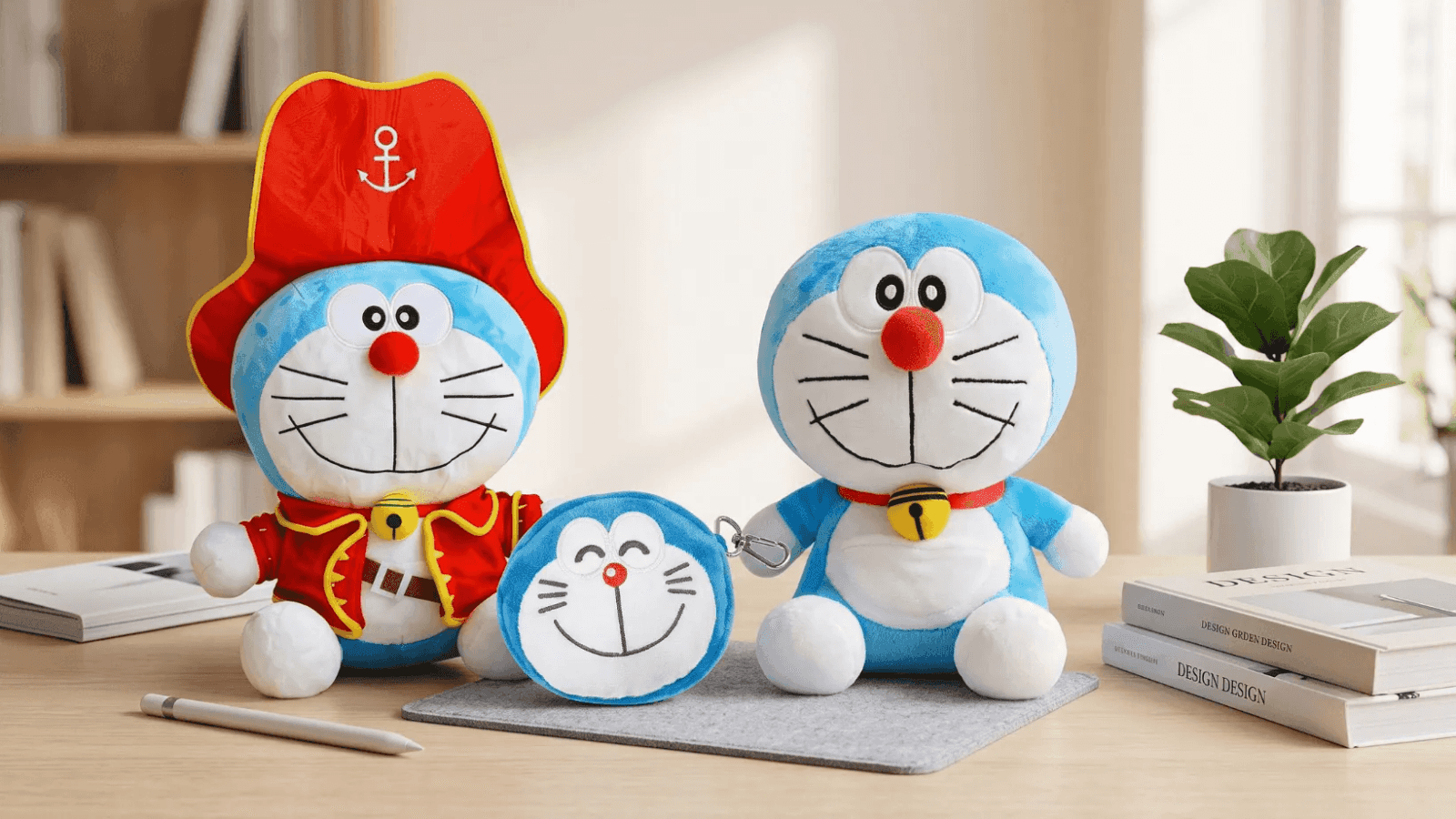
- Doraemon comes down to a specification: an exact face ratio and one precise Pantone blue. A fraction off, and the character stops looking like himself.
- Every SKU cleared a brand-compliance review and licensor sign-off before moving to production, a stricter bar than a routine quality check.
- That discipline, built to meet Japanese licensing's strict QC standards, still shapes how Takara manufactures for clients today.
Twenty-six SKUs, one character whose entire identity rests on a ratio and a color code: that was the brief when Takara became OEM manufacturer behind Doraemon, Shin-chan, and One Piece merchandise in Vietnam, working for Tagger, the long-time master licensee that holds all three characters in the market.
The brief.
In 2018, Takara became an OEM manufacturer for Tagger's Doraemon, Shin-chan, and One Piece license, covering 26 SKUs across apparel and merchandise, plus the e-commerce fulfillment behind them. The commercial relationship ran through Tagger, not directly through the Japanese IP holders, but the standard Takara had to meet was set by them: apparel and merchandise built to Japanese licensing's strict QC standards, with a licensor reviewing every design decision on the other side of the approval.
A very specific blue.
The challenge sat in the smallest details. Doraemon's face holds an exact ratio: the eyes, the whiskers, the space between them, all fixed. The blue follows one precise Pantone shade, and a fraction off means the character no longer looks like himself.
Close enough: "It looks like Doraemon."
The standard: "It matches the Pantone code, to the exact ratio, on all 26 SKUs, every time."
Japanese licensors don't compromise on those details. They treat authenticity as a specification: every fabric dye lot, print run, and finished sample had to trace back to the same reference before earning sign-off.
How Takara holds the line.
Meeting that standard on 26 SKUs meant building color and proportion control into the process itself: every design cleared a brand-compliance review before cutting began, and every finished sample went back to the licensor for sign-off before a run could scale. It's the same 3-stage QC process Takara still runs today, applied here against a standard where "close" was not a passing grade.
26 SKUs across apparel and merchandise, one exact Pantone blue, and an e-commerce fulfillment operation running behind all of it.
That work ran through Takara's partner factory network in Vietnam, not a Takara-owned production floor, coordinated as one program instead of a set of separate vendor relationships, so the same color standard held from the first cutting table to the last carton packed for fulfillment.
Why this matters beyond one license.
A licensor handing over 26 SKUs of a character this recognizable trusts a manufacturer with more than a production order: how the character looks on a shelf next to Japan's own version of it. Holding that line on Doraemon built the muscle Takara now applies across every licensed program in its portfolio.
What this proves.
- A licensor's standard is a specification: an exact ratio and an exact Pantone code, checked against the same reference every time.
- Takara clears brand-compliance review and licensor sign-off before a run scales, not after a problem ships.
- One managed partner network keeps a color standard consistent across dozens of SKUs. A chain of separate vendors doesn't.
If a licensor's style guide governs your program, explore our licensed plush toy manufacturing services or contact our engineering team to request an OEM plush toy sample before the first sketch gets approved.
Looking to engineer custom mascot plushies or exclusive IP merchandise for your brand? Explore Takara's Corporate Gifts & Merchandise Manufacturing solutions.